If you have a child or a teen in your house, there’s a good chance that YouTube and other forms of mass media play a large part of your daily life. Did you ever stop and think about the advertisements that kids are subjected to when watching these videos? What effects are these ads having on the kids?
According to a study by the American Academy of Pediatrics children view somewhere between 13,000 to 30,000 television advertisements per year (Lapierre, Fleming-Milici, Rozendaal, McAlister, & Castonguay, 2017, p. 1).
This number is strictly television advertisements- the number is even larger if you include YouTube, radio, and other types of advertisements-some of which is organic convergence, or unintentional exposure to advertising sources in school or from their friends (for more on convergence, click here .
We have to protect our children and properly educate them about advertising practices. Some examples of target marketing include YouTube influencers, the Vaping/e-Cigarette epidemic, and fast food; all of these groups may have predatory advertising, as detailed below.
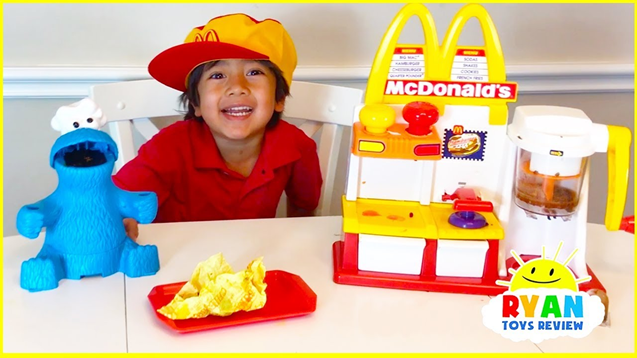
Most people are familiar with the popular YouTube influencer channel “Ryan’s Toys Review” whose target audience is young children-all of whom are too young to understand advertising.
-Non-profit organization “Truth in Advertising”, or TINA for short, filed a complaint with the Federal Trade Commission claiming deceptive advertising practices by Ryan’s Toy’s Review for not clearly disclosing which videos were paid promotions versus which were just Ryan filming a video for entertainment.
-Read the compliant by clicking here.
– The case against Ryan’s Toys Review is pending as of September 2019. While Ryan’s Toys Review might be deceptive, it isn’t necessarily harmful in terms of false claims or spreading misinformation.
What if the issue was something more harmful? What if Ryan’s Toys Review convinced our children to buy harmful products?

Some advertisers are directly targeting our youth with misleading and harmful information with the intention of selling to children who don’t know any better. One specific incidence of predatory target marketing is in the area of e-Cigarettes, or “Vapes” or “Vaping”.
-A study conducted in 2016 by the Centers for Disease Control, or CDC, uncovered that seven out of ten middle-school aged children are exposed to advertisements for e-Cigarettes.
-According to the study the marketing groups promote sex, rebellion, and being independent in the advertisements for the e-Cigarettes, and other non-traditional tobacco products, to appeal to the middle-schoolers (“E-cigarette ads reach nearly 7 in 10 middle and high-school students,” 2016, p. 1).
-A direct quote from CDC Director Tom Frieden, M.D., M.P.H., states “The same advertising tactics the tobacco industry used years ago to get kids addicted to nicotine are now being used to entice a new generation of young people to use e-cigarettes” (“E-cigarette ads reach nearly 7 in 10 middle and high-school students,” 2016, p. 1).
Have we learned nothing from the past and how harmful any tobacco product is to our health? Yet these major corporations are coming after our impressionable children.
In another article by the International Chamber of Commerce, points out that marketing needs to be “sensitive to the level of the children’s understanding”, meaning that children may not understand the information being presented to them which can create deception.
The International Chamber of Commerce article goes on to mention the direct correlation between fast food advertisements and childhood obesity, stating that nearly half of the daily advertisements our children are exposed to is regarding food (“Marketing and Advertising to Children,” 2020, p. 1).
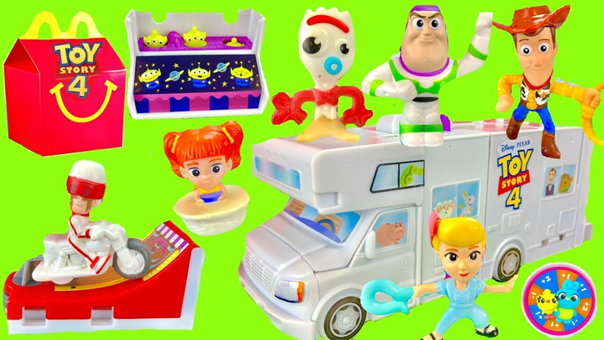
With many advertisers, such as McDonalds and Burger King, doing things to entice kids such as putting toys in their kid’s meal, or even by doing a paid promotion with something like Ryan’s Toys Review, we as parents have to educate our children on healthy practices.
So is the media entirely responsible for exposing our children to bad information?
The media isn’t entirely responsible for what our children view.
We must be diligent as parents and care-givers to educate our kids on target marketing and deceptive practices.
Talk to your children about how YouTube “influencers” are paid to make videos and get their followers to buy product.
Discuss the dangers of e-Cigarettes and vaping; research the statistics and show your kids the facts regarding the health dangers associated with these devices.
Teach your kids about nutrition facts and how to eat fast food in moderation.
If we don’t take responsibility for what our children are viewing, the media will and their advertising tactics will influence children to see things their way.
References
E-cigarette ads reach nearly 7 in 10 middle and high-school students. (2016). Retrieved from https://www.cdc.gov/media/releases/2016/p0105-e-cigarettes.html
Lapierre, M. A., Fleming-Milici, F., Rozendaal, E., McAlister, A. R., & Castonguay, J. (2017). The Effect of Advertising on Children and Adolescents. Retrieved from https://pediatrics.aappublications.org/content/140/Supplement_2/S152
Marketing and Advertising to Children. (2020). Retrieved from https://iccwbo.org/global-issues-trends/responsible-business/marketing-advertising/marketing-and-advertising-to-children/
 Losi Communications